
What Are My California Employee Rights? Learn the Basic Protection Offered to You
California law covers your pay, your breaks, your leave, discrimination, workplace safety and retaliation. This page covers the basics of each and tells you which agency handles what, so you know where to go when something goes wrong.

Who Handles What
- Labor Commissioner (DLSE). Unpaid wages and overtime, and retaliation complaints. You generally have three years to bring an overtime claim. A retaliation complaint with the Labor Commissioner generally has to be filed within one year of the violation (Labor Code 98.7).
- California Civil Rights Department (CRD). Discrimination and retaliation in employment. In employment cases, you must submit an intake form to the CRD within three years of the date you were last harmed.
- EEOC. Federal discrimination claims. A charge generally has to be filed within 180 days, extended to 300 days if a state or local agency enforces a similar law.
- EDD. Paid Family Leave and State Disability Insurance.
- Cal/OSHA. Workplace safety.
Wage & Hour Rights
Overtime & Minimum Wage Basics
The statewide minimum wage is $16.90 an hour in 2026. Some cities and counties set higher rates, and you are entitled to whichever is higher where you work.
For non-exempt employees, overtime is 1.5 times your regular rate for hours over 8 in a workday (up to 12), for hours over 40 in a workweek, and for the first 8 hours on the seventh consecutive day of a workweek. It is double your regular rate for hours over 12 in a workday and for hours over 8 on the seventh consecutive day. Overtime you worked without approval is still owed, and you cannot waive it. See how many hours count as overtime.
Exempt employees are the exception. You generally must spend more than half your working time on exempt duties and earn a salary of at least twice the state minimum wage for full-time work, which is $70,304 a year in 2026.
Meal & Rest Breaks
If you work more than 5 hours, you are entitled to a 30-minute meal period, which under Brinker Restaurant Corp. v. Superior Court (2012) must be provided no later than the end of your fifth hour. A second meal period is required when you work more than 10 hours. You are also entitled to a net 10 consecutive minutes of rest for each four hours worked, or major fraction. If your employer does not provide a required meal or rest period, Labor Code 226.7 requires one additional hour of pay for each workday it was missed. See our guide to the California lunch break law.
Paid Sick Leave
Employers must generally provide at least 5 days or 40 hours of paid sick leave a year. You can use it for your own health care or to care for a family member, and as of 2025 also for jury duty and certain purposes related to acts of violence.
Unpaid Hours
If you worked hours you were not paid for, you may have an overtime or wage claim. Keep records of your start and end times, your pay stubs and any schedule. The Labor Commissioner handles these claims. Learn more about wage and hour violations.
Discrimination Protections
State and Federal Deadlines
In California, discrimination and retaliation claims in employment go to the Civil Rights Department, which requires an intake form within three years of the last harm. Federal claims go to the EEOC, which has a 180-day deadline that extends to 300 days in states where a state or local agency enforces a similar law. See our guide to workplace discrimination in California.
Under federal law, compensatory and punitive damages for intentional discrimination are capped by employer size: $50,000 for employers with 15 to 100 employees, $100,000 for 101 to 200, $200,000 for 201 to 500, and $300,000 for more than 500 (EEOC). Title VII covers race, sex and other protected traits, and the ADA covers disability.
Leave & Family Rights
Paid Family Leave (PFL)
Paid Family Leave pays partial wages while you take time off to care for a family member or bond with a new child. You can receive it for up to 8 weeks within any 12-month period. The weekly benefit is about 70 to 90 percent of your wages, depending on your income, and the maximum weekly benefit in 2026 is $1,765. PFL is funded by payroll deductions from workers, not paid by your employer. You apply through the EDD online (myEDD and SDI Online) or by mail, and processing typically takes about 14 business days after the EDD receives a complete application.
For job-protected leave rules, see our guide to California paternity leave.
Workplace Safety & Health
Cal/OSHA enforces California’s workplace safety rules. California’s COVID-19 non-emergency regulation, which required things like physical distancing, expired on February 3, 2025. Only a COVID-19 case recordkeeping requirement continued until February 3, 2026.
Wrongful Termination & Retaliation
At-Will Exceptions
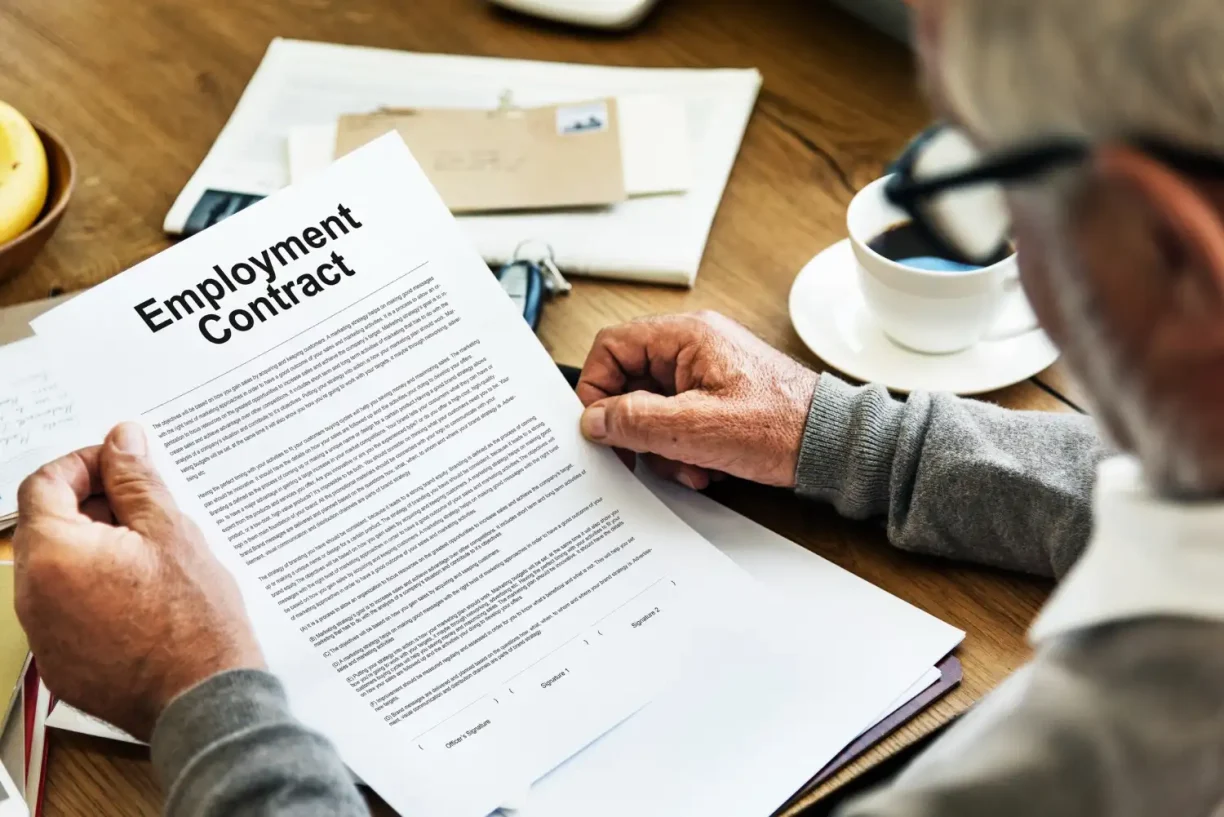
California is an at-will state, but an employer cannot fire you for an illegal reason. The California Supreme Court recognized a claim for firing that violates public policy in Tameny v. Atlantic Richfield Co. (1980). For more, see our guide to wrongful termination claims.
Retaliation
Labor Code 1102.5 bars an employer from retaliating against you for reporting a suspected legal violation to a government agency, to a person with authority over you, or to a coworker with authority to investigate or fix the problem, or for refusing to take part in illegal activity. It also bars retaliation for exercising those rights at a former job. A penalty of up to $10,000 per employee for each violation is awarded to the employee who was retaliated against. Since the California Supreme Court’s 2022 decision in Lawson v. PPG Architectural Finishes, you need to show only that your protected report was a contributing factor, and then your employer must prove by clear and convincing evidence it would have acted the same way anyway. Since January 1, 2024, Labor Code 98.6 also includes a rebuttable presumption in the employee’s favor when an employer takes an adverse action within 90 days of the protected activity that section lists. For more, see our guide to Labor Code 1102.5.
What to Do If Your Rights Were Violated
- Write down what happened and when. Save pay stubs, schedules, texts and emails.
- Note the deadline for the agency that handles your issue (see Who Handles What above).
- Talk to an employment attorney before you file, so you file with the right agency in time.
Frequently Asked Questions
What is California’s minimum wage in 2026? $16.90 an hour statewide. Some cities and counties set higher rates.
When does overtime start in California? For non-exempt employees, after 8 hours in a workday, after 40 hours in a workweek, and for the first 8 hours on the seventh consecutive day of a workweek. Double time applies after 12 hours in a day and after 8 hours on the seventh consecutive day.
How much paid sick leave do I get? At least 5 days or 40 hours a year, generally.
How long does Paid Family Leave last, and how much does it pay? Up to 8 weeks within any 12-month period, at about 70 to 90 percent of your wages depending on income, up to $1,765 a week in 2026.
How long do I have to file a discrimination complaint? With the California Civil Rights Department, within three years of the last harm. With the EEOC, generally 180 days, or 300 days where a state or local agency enforces a similar law.
Can my employer retaliate against me for reporting a violation? No. Labor Code 1102.5 prohibits it, and a complaint to the Labor Commissioner generally has to be filed within one year of the violation.
Why Speed & Expertise Matter for California Employee Rights?
If you’re not happy with your employer and believe they’re violating your employee rights, talk to Rio Law right away. Fill out this form, and we’ll get back to you after reviewing your case and determining its eligibility.

About Rio Law Group
Rio Law Group connects California employees with experienced employment attorneys for wrongful termination, discrimination, wage and hour violations, and medical leave problems.


 Call