Can You Cancel a Cashier’s Check? Learn All About the Possibilities and the Complications
Can you cancel a cashier’s check after giving it to someone? Yes, it’s generally possible to cancel or “void” the cashier’s check if the other person hasn’t cashed or deposited it yet. But this process is more complex than stopping payment on a personal check. The cancelability of your cashier’s check depends on if it’s been presented for payment. If not, you can simply request your bank to void it after providing the check ID, number, and a formal affidavit.
However, things start getting murkier once the receiver cashes your check. Cancellation isn’t an option anymore. That’s because your bank guarantees the funds, so now the transaction has been completed. We’ll discuss these problems in detail in this article. You’ll learn how to stop payment on your check and the steps to take if someone has stolen the check.
If you’re afraid someone might take advantage of a fraudulent check or has scammed you by faking your signature, you should contact a strong legal team based in California to fight this case on your behalf. Let’s start by discussing what the term “cashier’s check” means.
Quick answer: Yes, you can cancel a cashier’s check, but generally only before it has been cashed or deposited. Once the recipient cashes it, the bank has completed the transaction and typically cannot reverse it. To cancel an uncashed check, contact your bank promptly with the check number, amount, and payee details. If the check was lost or stolen, California law requires a sworn declaration of loss, and your claim doesn’t become enforceable until 90 days after the check date or the date you file the declaration, whichever is later.
What is a Cashier’s Check?
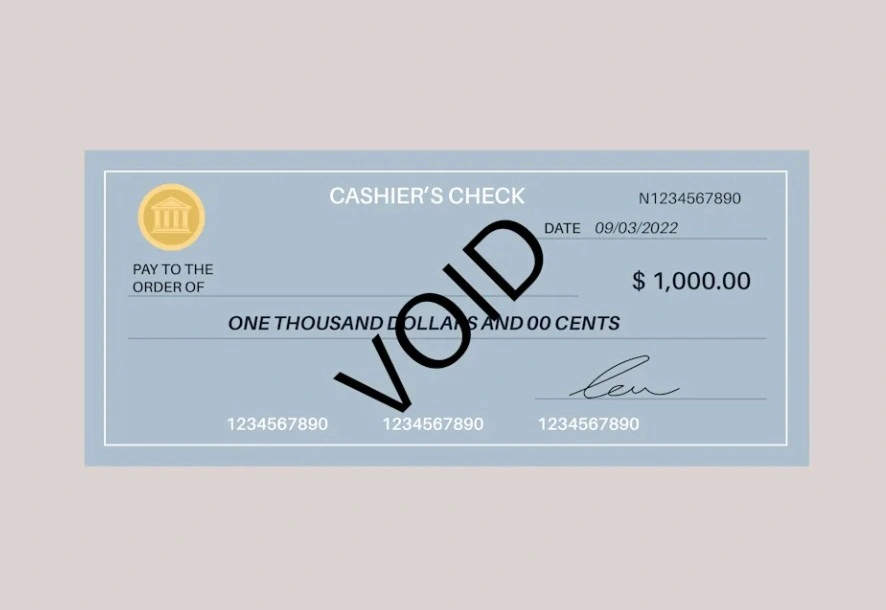
A cashier’s check is a payment instrument that a bank or credit union (CU) issues. The bank guarantees payment to the receiver this way. Your bank takes the money from your account upfront and then issues this check from its account (not directly yours). That’s how the bank is promising the receiver that these funds will be available when cashed. So, you should only use these checks when you’re buying property (i.e., large/important transactions).
How a Cashier’s Check Differs from Personal Checks
Source: Personal checks draw funds directly from your account. Cashier’s checks are backed by the bank’s funds.
Security: These checks include signatures from bank employees, including security features like watermarks.
Reliability: As the bank is guaranteeing payment, these checks are less likely to bounce.
Security & Guaranteed Funds
You will notice that cashier’s checks offer more security than normal checks. They’re much more reliable as well. After all, it’s your bank certifying the availability of funds, setting them aside for your business partner. A bank representative signs these checks as a doubt-free proof of authenticity. Your business partner will get faster clearance with this check.
When Can You Cancel a Cashier’s Check?
There’s a scam going on 2,700+ miles away in Florida where fraudsters are sending bogus cashier’s checks to lawyers for settlement, hoping that lawyers will release funds before the bank realizes it’s a scam. What happens when these scammers turn their attention toward Californians? Here’s one thing you need to understand: once someone cashes/deposits a cashier’s check, it’s usually not cancellable, making things a tad complicated.
Your bank will demand a waiting period of up to 90 days before refunding a cancelled check to help prevent fraud. This cancellation often comes with a small fee. If you want to get your refund as quickly as possible and stop payment, contact your bank right away. We’ll paint a few scenarios here in which people realize their cashier’s checks must be voided.
Condition #1: Your Check Wasn’t Cashed or Deposited
Emily writes a cashier’s check to buy antique furniture. But she learns that the seller is not a reliable person only after mailing the check. She now wants to cancel this transaction. Lucky for her, the check is still uncashed and in her possession. She talks to the bank, and the staff tells her to bring in identification, the check, and fill out a cancellation request. After a short waiting period to make sure that the check hadn’t been cashed, she got her refund.
Explanation: Cancellation is possible when your cashier’s check is uncashed/undeposited. Your bank will simply confirm that the check hasn’t been negotiated before refunding you.
Condition #2: You Wrote the Wrong Payee or Amount
Roberto wants to pay two grand for a used Ford, but mistakenly asks the bank to release a cashier’s check for $20,000. Realizing his error the next day, he goes to the bank, where he explains his folly. He requests a cancellation. Since the check is still uncashed, the bank can make it void. Roberton then reissues a corrected check to his dealership.
Explanation: Banks permit cancellation when you write the wrong payee name or an incorrect amount. The purchaser offers proof, so the bank nullifies the original cashier’s check.
Condition #3: Lost, Stolen, or Misdirected Checks
After sending a cashier’s check for a home deposit via mail, Lisa never got confirmation from the seller. They fear that their check might be lost. They report the loss to the bank and file an affidavit of loss. Their bank places a stop on the original check. After a waiting period of a few weeks, Lisa gets a replacement check from the banking establishment.
Explanation: If a cashier’s check is lost or stolen (or doesn’t reach the payee), you can request a cancellation by filing a sworn declaration. The bank investigates and waits the statutory time to make sure that the original hasn’t been cashed.
Condition #4: You Changed Your Mind, and the Check Isn’t Used Yet
Mannan has written a cashier’s check to a contractor for home renovation. He later decides to postpone the project. He has the check and doesn’t hand it over to the contractor. Mannan goes to his bank and asks to cancel the check. After the bank has verified that the check is still valid but uncashed, the bank cancels it and refunds the amount.
Explanation: Cancellation can occur if the purchaser changes their mind and the check has not yet been used. Prompt communication with the bank is necessary.
6 Simple Steps to Cancel Your Cashier’s Check
Imagine yourself in Tony’s shoes. Tony found himself in a situation where he wanted to void a cashier’s check for a recent purchase he had made while drunk. Now, he realized he probably could live without a $10,000 European-made vase from Craigslist. These steps helped him void the check and get a refund on his payment.
Contact Your Bank Right Away
Tony realized he wanted to cancel the cashier’s check. So, he contacted the bank without a moment’s delay. Early communication was important for him. That’s because he could only cancel a cashier’s check if it hadn’t been cashed yet. Tony called the customer service right away and planned a visit to his local branch, where he spoke directly with a bank rep.
Provide Check Details
Tony communicated with the bank by offering the necessary details to help identify that one particular check. This included the check number, the exact amount, the payee’s name, and the date of check issuance. Providing accurate information allowed the bank to easily track the check.
File an Affidavit of Declaration of Loss
Tony had misplaced the cashier’s check temporarily. Therefore, the bank told him to quickly file an affidavit of loss. This legal statement outlined that the check was lost or stolen. Thus, this document protected both Tony and the bank from potential fraud. Filing the affidavit was a formal step that started the legal cancellation process.
Waiting Period for Bank Confirmation
After submitting all documents, Tony was told about a mandatory waiting period of 90 days. This interval permitted his bank to verify that the cashier’s check hadn’t been cashed by the Craigslist seller. The waiting period protected Tony against fraud and ensured that his check wasn’t used to pay $10,000 from the bank’s account.
Pay the Bank’s Cancellation Fee
Tony was also told that there was a cancellation fee involved. Most banks charge this fee, which can vary based on the institution’s policies and the check amount. Understanding this upfront helped him prepare for any deductions when getting his $10k back.
Get a Refund on Your Check
Once the waiting period concluded and the bank confirmed the check hadn’t been cashed, Tony received a confirmation of the cancellation. The bank then refunded the original amount to his account. Alternatively, such refunds are issued in the form of a replacement cashier’s check if needed.
“One Cashed, Cancellation is Impossible:” Is This True?
In the 1992 movie Glengarry Glen Ross, there’s a scene with Mr. Lingk (Jonathan Pryce) and a real estate salesman named Roma (Al Pacino). Lingk gives Roma a check as a down payment for a property. But his wife talks him into backing out of the deal, demanding the return of the check. She tells him that someone advised her they have a three-day period to cancel the deal and get the check back (much to Roma’s chagrin).
This moment in the movie touches on a legal concept called the “cooling-off period.” You may also know it as a recession period, in which some jurisdictions let buyers cancel some contracts within a limited timeframe to reclaim their payments. The idea resonates with the real-world rules surrounding cashier’s checks and contract cancellations.
Even though Lingk believes he can simply cancel the deal and get the cashier’s check back, canceling a cashier’s check is more complex (practically speaking). A cashier’s check has the backing of your bank. Once cashed, it can’t simply be revoked like a regular check.
Even during a cooling-off period, if the cashier’s check is cashed/deposited, reclaiming that money is much harder and often requires legal action, especially if fraud or disputes arise. So, you may need to get lawyers involved. If your check has been checked, you are in bad waters. But experienced lawyers will help you get out of this problem with their expertise.
What If Your Check Has Already Been Cashed?
An Alabama man was arrested back in July for using a fake cashier’s check to buy a car. So, you may wonder what if your check has already been cashed. Can you cancel a cashier’s check in this case? In this case, cancellation isn’t possible. A cashier’s check is, after all, a foolproof promise of payment (backed by the bank’s funds). Once the check’s been cashed or deposited by the payee, the bank has fulfilled its obligation by releasing the money.
Unfortunately, these checks are unlike personal checks; while cancelling personal checks is possible before processing, cashier’s checks carry a guarantee of payment. In other words, once the check has been cashed, the bank simply can’t reverse the payment or give you a refund. The bank’s responsibility ends once the check clears and the check holder gets paid.
This irrevocability is crucial here! A cashier’s check tells sellers they will get their funds. So, businesses or individuals doing larger transactions use this check type. But what should you do if someone defrauds you or takes money from a bank using a bogus cashier’s check?
What to Do If You Suspect Theft or Fraud
In October, a family in Spokane, Washington, sent a cashier’s check for $50k to a loved one, but it was stolen midway. But the family was quick to discover the potential fraud. They told the bank and cancelled the check before it could be cashed. So, here’s the situation before us. You wrote a genuine cashier’s check, but somebody stole it from the actual holder. What do you do now? You can pursue legal remedies outside of the bank’s cancellation process.
Filing a Police Report: You should contact the police. Create an official record that will lead to investigations into fraud/theft.
Contacting a Lawyer: Legal counsel can advise on pursuing civil action against the party who cashed the check (if they have misappropriated funds).
Civil Lawsuits: You may sue for restitution or damages to recover lost funds. The court may require proof of fraud or wrongdoing.
For example, if a scammer convinces your aged uncle living in a retirement home to write a cashier’s check in exchange for a fake product/service, and the check is then cashed, your recourse is through the courts, not the bank. You need to bring a suit against the scammer. That’s when you must hire experienced attorneys who can prove the scam before a judge.
Why You Need to Act Quickly to Prevent Monetary Loss
When you’re dealing with fraud or theft involving cashier’s checks, you have to act swiftly. A significant delay reduces the chances of recovering these funds or stopping the transaction. You need to notify both the bank and authorities upon suspicion of unauthorized use. Don’t forget to gather all transaction documents, receipts, and communication related to the check. Monitoring your credit reports for signs of further fraudulent activity also helps.
What California Laws Say About Cashier’s Check Cancellation
Governing Law
COM § 3312
Cancellation Conditions
You can cancel the check if it was lost, stolen, or destroyed (a declaration of loss is required)
Waiting Period
A safe harbor period of 90 days before the refund
Cash and Payment
The bank must honor the payment once the cashier’s check is cashed or accepted (no “stop payment” allowed)
Fee and Charges
Reasonable cancellation fees
Consumer Protections
Legal frameworks balance bank security and consumer safeguards, with timely notification & documentation requirements
Bank Liability
Banks are not liable for refusing payment if a reasonable doubt exists about the check holder’s entitlement
Practical Advise
Contact your bank right away if you need cancellation
Tips for Handling Cashier’s Checks Safety
Keep Your Cashier’s Checks Safe: You should always store cashier’s checks in a safe and secure place. Don’t leave them somewhere they’re accessible to any Tom, Dick, and Harry.
Verify Payee Information Carefully: Always double-check a cashier’s check before signing it. Make sure that the payee’s name is spelled correctly and exactly matches the intended recipient. Altering the payee after you’ve issued the check is impossible, so make accuracy your #1 priority.
Act Quickly Upon Fraud Suspicions: If you suspect your cashier’s check has been lost or stolen, contact your bank immediately. Early reporting gives your bank enough time to place a “stop payment” and formally begin investigating what happened.
Get Expert Lawyers Involved: Don’t forget to seek legal assistance if you believe you have been scammed by someone who deluded you into signing a bogus check. Contact California-based lawyers who can handle this case on your behalf.
Cancellation of a cashier’s check is generally possible before the check has been cashed. Once the check is paid out or deposited, the bank can’t reverse the transaction. You need to understand this timeline to protect your funds and avoid financial loss. Learn what cashier’s checks are for and what they mean; practice caution when writing a cashier’s check. If you encounter disputes, suspected fraud, or unauthorized use involving a cashier’s check, it is recommended to seek legal assistance promptly. We at Rio Law can help you explore your options, guide you through the complexities of the law, and work toward recovering your losses. Our experienced attorneys will make sure that your rights are protected in these situations. Contact us right away if you feel someone has robbed or scammed you!
Meet Our California Lemon Law Attorney
Sam Mollaei, Esq.
Sam Mollaei is the Founder and Managing Attorney of Rio Law Group, where he leads a results-driven team dedicated to fighting for the rights of California employees. From wrongful termination and discrimination to wage violations and medical leave abuse, Sam and his team have helped hundreds of workers across California secure justice and compensation for employment law violations. His approach combines legal expertise with strategic business practices, aiming to transform the delivery of legal services in employment and consumer protection law.





 Call
Call