
How to Get Pain and Suffering Compensation for Your Injuries in California
You have often heard of people getting this pain and suffering compensation for their injuries or accidents.
We’ll talk about this compensation in the modern workplace. If your employer in California has discriminated against you, harassed you, stolen your wages, denied you OT, or hurt you in any way, you can ask for pain and suffering damages. We at Rio Law will tell you how. We’ll explain the logic behind these damages and how you should prove fault.

The Lasting Grip of Pain of Workers
Let’s say you got injured at your workplace. Your employer didn’t tell you the floor was slippery, so you fell and broke your ankle. The impact of this broken ankle will probably stick around way longer than you’d hope, even after the injury has apparently healed. Your simple daily routines will turn into real struggles. Slipped on an oil-slicked floor? Or got hit by falling debris? Chronic back spasms & headaches are your new normal. Even tying your shoelaces will be a challenge.
We call it “persistent nociceptive pain.” It is compensable under California’s Fair Employment and Housing Act (FEHA). It protects you from employer slip-ups that lead to lasting harm. Can you even demand these damages from the government? Remember the Palisades Fires from last January? The victims’ families are now suing the city of LA for pain & suffering damages.
How Emotional Suffering Keeps Piling On
But this physical pain is just one side of the story. Let’s look at the big picture, i.e., the emotional side of your suffering. Suffering itself is emotional. You spend sleepless nights, turning in your bed. You snap at your kids or become paranoid about everything. Getting back to work seems like a hassle. Tension headaches and anxiety attacks can degrade your quality of life.
The American Psychological Association believes these emotional problems are linked directly to job hazards. Your anxiety isn’t something you can tough out, as employers like to say. When these stressors are caused by safety lapses at work or denied breaks, you’ve got a case.
Why California Law Treats Pain & Suffering Differently
FEHA does not set a dollar cap on damages (Government Code section 12965).

California’s Legal Framework for Worker Damages
FEHA is your guardian angel here. The Fair Employment and Housing Act becomes the basis of your pain and suffering compensation demands. It demands that employers provide you with reasonable accommodation. It also bans discrimination against you. Section 12940 spells it out clearly that “physical disability” harms (like pain from bad workstations) come with no cap on your damages. It’s a big deal compared to medical malpractice cases under MICRA.
Labor Code section 4558 is narrow. It allows a civil action against an employer when the employer knowingly removes, or fails to install, a point-of-operation guard on a power press and that causes an employee’s injury or death.
Proving Fault: The Qualification Game-Changer
California limits non-economic damages only in lawsuits against health care providers for professional negligence (Civil Code section 3333.2). For claims filed on or after January 1, 2023, the limit started at $350,000 ($500,000 in a wrongful death case) and rises each January 1 for ten years, to $750,000 ($1,000,000).
But you still have to qualify for these damages. You must show that your boss actively ignored your warnings about slippery floors. Once you nail this proof, you’re in line for the real pain & suffering money you deserve. It begins with quantifying your pain and getting a dollar value.
Putting a Price on Your Pain: How Do We Value One’s Suffering?
What is your pain worth? Figuring it out isn’t guesswork. We assign a monetary value to your suffering based on what California courts have awarded to plaintiffs in similar cases. Take the Comparative Worth Model, i.e., lawyers often look at past verdicts for matching situations.
California law gives no fixed formula or typical range for pain and suffering. Jurors are told to use their judgment and common sense to decide a reasonable amount based on the evidence (CACI 3905A).
We at Rio Law have written a blog explaining the full process of calculating pain & suffering.

Building Your Evidence Arsenal
Your pain and suffering compensation also depends on how well you have documented all the evidence. For instance, if you have filed a disability discrimination lawsuit, you must keep a dedicated record of the offensive messages in the group chat. Use PainScale to create easily shareable reports after your slip & fall accident. Record your ignored maintenance requests or emails begging for ergonomic chairs. Verify these claims with third-party examinations.
Your evidence arsenal determines how much money you’ll receive. It should include:
- Daily symptom trackers with photos of limitations (e.g., can’t grip tools)
- Colleague statements: Saw her wince hourly but push through
- Billing for pain meds/therapy, projecting future costs via life-care plans
- Social media posts (pre-injury vs. now) show lost hobbies
- Expert depositions from orthopedists linking pain to negligence
- Payroll stubs prove overtime worsens repetitive injuries.
Dealing with Employer & Insurer Pushback
Some bosses like to downplay your pain. It’s always their 1st line of defence. You’ll hear them say something about pre-existing conditions (maybe that old back tweak from a decade ago) or arguing that your injury is a normal job-related risk. But you must know how to fight back.
You can win this case by showing clear timelines, doctor notes right after the accident, work logs proving when your pain kicked in hard, and emails where you flagged these dangers. Tie these things directly to your employer’s negligence. Like a supervisor who dismissed your slip-and-fall complaints. This way, your employer’s lame excuses will crumble like a wall of dust.
Red Flags Screaming “Walk Away”
Want to avoid dishonest bosses and scheming insurance agents? Watch out for red flags. If you see these red flags, you should walk away from the deal and bring a lawsuit:
- Quick Buck: There’s a reason why you always reject the first offer. Insurance guys will quote you the lowest amount possible.
- Fast Release Demands: Don’t fall for those sign-now-get-paid deals. They block future claims by giving you crumbs in the present.
- “Independent” Medical Exams: Their doctor will claim to be neutral but downplay your symptoms. You should get a doctor on your own.
- Shifting the Blame: They may also try to claim this is your fault or nobody’s fault. Stuff happens.
- Radio Silence: Stalling tactics wear you down. You need to set a deadline in writing.
Why Teaming Up with Rio Law is the Right Idea
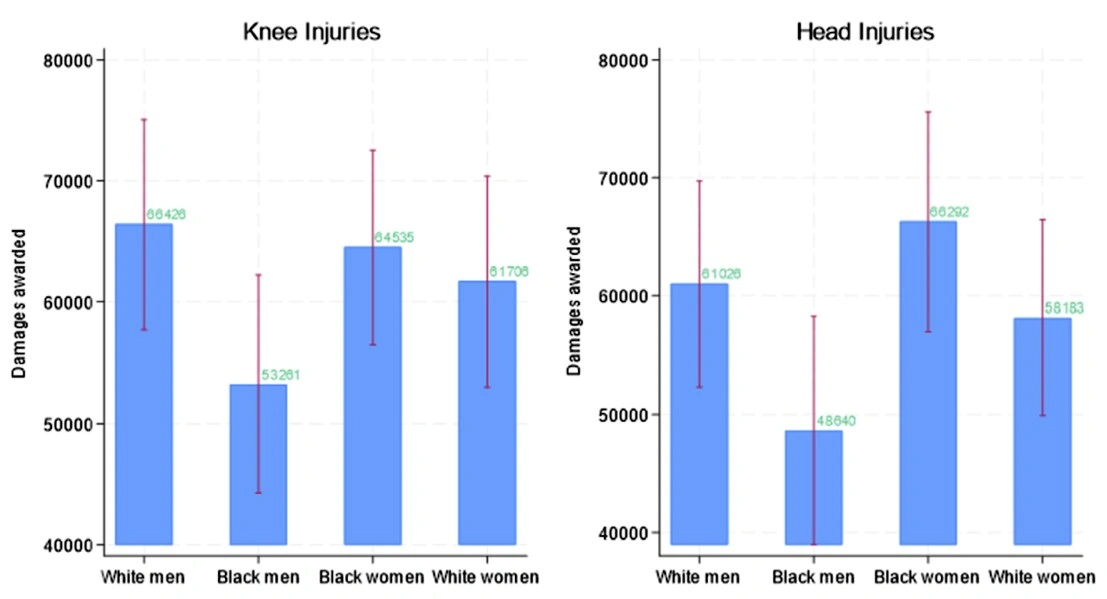
The graph we have shared above shows what sort of pain and suffering compensation you get based on your injury type, race, and gender. The results are very obvious, so we won’t like to comment on them. It’s really sad that even pain & suffering damages in the US are impacted by one’s gender or ethnic identity. That’s where the role of a lawyer becomes prominent.
Recover the Compensation You’re Due with Rio Law
Get your pain and suffering compensation by partnering up with Rio Law. We have shared with you a complete roadmap to turn your workplace injury into meaningful compensation. So, don’t let employer excuses or insurance games rob you of what’s rightfully yours.
You can start today by grabbing a notebook and logging every ache, sleepless night, missed family moments, or nightmarishly awful memory; pair it all with your medical bills and witness statements.
Take action right now by calling Rio Law. Get your free, no-obligation case review. Our experienced team will review your evidence confidentially and explain your full options under California laws. Statutes of limitations are ticking fast, and every delayed day weakens your claim.
Dial today and reclaim your life with Rio Law.

About Rio Law Group
Rio Law Group connects California employees with experienced employment attorneys for wrongful termination, discrimination, wage and hour violations, and medical leave problems.


 Call