What Are My California Employee Rights? Learn the Basic Protection Offered to You
Imagine you’re busy pulling double shifts at your demanding Los Angeles warehouse job. You clock over 12 hours each day. But then you realize that your paychecks are missing. Your boss didn’t pay you for that all-nighter you pulled two weeks ago. You speak to your supervisor about this, but they hit you with a write-up and threaten to dock your pay. Does it sound familiar to you? Because this has happened to many California workers.
Not everyone is aware of California employee rights. But one thing is for sure: the work & economic insecurity is rising in the Golden State. There’s a silver lining here (invisible to the laypeople), i.e., California has some of the strongest worker protection laws in the US. These laws protect you from scenarios where your blood & sweat go unpaid & unnoticed.
We have the FEHA, the Labor Code, Cal/OSHA, and many other legal shields that cover everything from overtime wages to workplace discrimination. These rules don’t exist on paper alone. They help you in real-life scenarios. We at Rio Law empower our clients based in California. We help you recover your lost pay and even secure punitive damages. Many employee rights violations start with unpaid extra hours, especially when workers are pressured to stay late or work off the clock. Understanding how many hours count as overtime in California can help employees identify wage theft early and protect themselves from further exploitation.
What Makes People Unaware of California Employee Rights
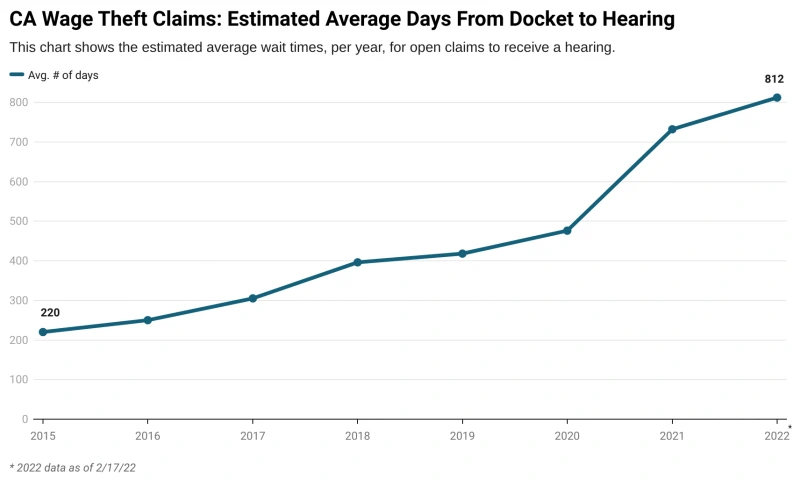
Many workers don’t seem to know about their rights as California employees. Others simply don’t think the law can help them in any way. The graph shared above shows that it now takes more time for wage theft claims to go from the docket to hearing; the delay nearly quadrupled between 2015 and 2022. That’s why US workers are glum about compensation & wages. Yet they don’t complain against their bosses because of these reasons:
They are afraid of retaliation: Some bosses act like asking questions is an act of rebellion. If employees ask, “Am I owed overtime?” this question triggers write-ups and shift cuts. The threat of pink slips keeps curious workers “in line,” so they don’t retaliate. When the boss retaliates against an employee, gossip spreads in the office, and other employees learn it’s better to stay silent and not say anything.
The legal maze overwhelms them: Let’s be honest, the law is quite complex, and a layperson looks at it with the same perplexity we have on our faces when we read a line of Python code. Deadlines also overwhelm employees who want to report wage theft. Non-English speakers find it hard to get someone to listen to their case.
Onboarding skips these essentials: New-hire packets often push “company rules” instead of informing the newbies about their genuine California employee rights. A guy from HR simply tells them that “salaried” means no overtime and “at-will” means they can be fired anytime for anything (“the manager has the flu, you’re fired!”).
Misinformation is rampant online: TikTok “tips” often clash with DIR facts. The lack of proper knowledge can make workers file their complaints in the wrong department.
Wage & Hour Rights
Let’s start with something simple. California employee rights forbid wage/hour violations. These laws demand overtime pay for you after just 8 hours a day. Your boss simply can’t exploit you by withholding overtime. The IWC Wage Orders are on your side!
Overtime & Minimum Wage Basics
You should always know your numbers. The minimum wage in the Golden State right now hovers between $16.50 and $16.90. It can be higher in areas like LA or West Hollywood. Overtime kicks in at 1.5x your regular rate after you have worked for 7 hours a day or 40 hours a week. It becomes 2x after 12 hours a day or on your 7th consecutive workday.
Meal & Rest Breaks
Your boss can’t make you skip lunch by creating a difficult schedule. You get 30 minutes as an unpaid meal break if your shift goes over five hours. A second meal break opportunity arises after 10 hours. You get rest breaks (10 minutes) after 4 hours. Picking sick leaves can sweeten the deal for you. You get 5 days per year. You can use your sick leaves for your illness or family care. Remember, accrual is steady, and front-loading is permitted.
Common Violations (Shockingly True)
A Subway franchise in Los Angeles came under fire when an employee sued it in 2024 for not paying overtime and denying sick leave. The employee says she worked 100 hours a week in some cases without getting paid for her extra labor.
Many employers steal wages from diligent workers by misclassifying them as “independent contractors.” That’s how they dodge overtime and breaks. This dishonesty affects many gig workers and temps. Off-the-clock work nets millions in unpaid wages.
Discrimination Protections
Are you facing discrimination at work for your sexual orientation or gender identity? All types of LGBTQIA+ discrimination are fightable (& winnable) in the Golden State. California seeks to make the entire state as inclusive as possible. The FEHA covers many situations & more people. It offers you stronger remedies than the federal ADA. That’s how nobody faces bad treatment, from their hiring to firing. Let’s explain what makes FEHA > ADA.
FEHA vs. ADA: California’s Stronger Shield
The table below shows that the FEHA packs a bigger punch for victims than the ADA. Learn how to apply for disability in California if you wish to seek compensation.
FEHA (California)
ADA (Federal)
How big is your company?
5+ employees
15+ employees
What sort of disability do you get?
Physical, mental, perceived, etc.
Primarily physical and mental
Which categories get this protection?
Race, gender, LGBT, age (40+), accent, and more
Race, gender, and disability (fewer categories)
What kind of damages can you get?
Unlimited punitive and emotional distress damages
Capped (for instance, at $100k to $300k)
Harassment, Pay Gaps, Denied Accommodations, and Other Issues
But discrimination isn’t always obvious. Not every employer discriminates against you by being openly racist. Harassment can happen when your supervisors (or fellow employees) create a hostile environment by using racial slurs, sexual jokes, offensive memes, off-hand remarks, deadnaming, or misgendering.
They may refuse to accommodate you if you have a disability or when you need prayer breaks. Accent discrimination is also a major issue; it happens when others mock the way you pronounce words during a meeting.
Leave & Family Rights
Some employers practice what we call “pregnancy discrimination.” A female worker expects a baby or wants to recover from the Caesarian. But her manager doesn’t allow her to take her maternity leave. She may also face wage cuts or demotions. But this is illegal, since the law says your boss must throw you a lifeline and let you step away from work.
Forget skimpy federal rules; here, the California Family Rights Act (CFRA) beefs up the Family and Medical Leave Act (FMLA), and Paid Family Leave (PFL) actually puts money in your pocket while you’re out. It’s simply about real support for hardworking folks.
CFRA and FMLA: Your Safety Nets
Imagine this fictional scenario. You qualify for up to 12 weeks of unpaid leave each year. You use it for your serious health problems, bonding with a newborn (within a year of the birth of the child or their adoption), dealing with a loved one’s illness, or military family emergencies. Your manager has to hold your spot, i.e., you get the same pay, benefits, seniority, the whole nine yards… until you come back to work. No “sorry, we filled your role” excuses will fly.
So, what’s the catch here? You must’ve worked in that company for at least 12 months (also, logged 1,250 hours in that duration). The CFRA shines brighter than the FMLA here, since it covers smaller companies (just 5+ employees). Forget about retaliation as well. Your boss can’t fire or demote you. It’s illegal to “punish” a worker for taking a leave of absence.
Paid Family Leave (PFL): Get Paid to Care
But PFL is the belle of the ball here. It gives you up to 8 weeks of partial pay. It is the same as 60% to 70% of your normal wages (capped at around $1,620 per week in 2026). But your boss doesn’t pay you these wages, the state disability insurance does. You can apply for it online through the website of the EDD (Employment Development Department). It means you can afford to take time off work without scrambling for your finances.
Some Violations Can Hit Really Hard
Amazon recently came under fire for discriminating against its pregnant employees working at the company’s large fulfillment centers. But Amazon isn’t alone here. Many bosses don’t always play fair. They use different tricks and tactics to deny you what’s rightfully yours.
Some bosses don’t reinstate you when you come back from your maternity leave, or retaliate by cutting your hours. They can also flat-out deny your leave request and make you work. A San Jose teacher argued that she was passed over for promotion after she had a baby. An LA retail worker got canned for staying home and taking care of his cancer-ridden father.
These cases are quite common; in fact, FMLA/CFRA issues flooded complaints in 2025. Maternity and caregiver denials can overlap with gender bias, making it doubly unfair!
Workplace Safety & Health
A Sacramento hotel worker filed a lawsuit against her employer for not keeping her safe at work. She alleged that the management stereotyped her, an African-American female, and assumed that she could deal with violent & possibly criminal guests. These unsafe & hostile conditions made her fiancé step in to defend her from a violent criminal who stabbed him. If your employer fails to keep you safe at work, you have every right to quit and sue them.
Cal/OSHA Standards for California Employers
Trust us; Cal/OSHA doesn’t mess around when it comes to employee safety. If your boss doesn’t comply with these standards, they have to pay hefty fines. These fines start at $5.8 per violation. Serious violations can escalate them to $131k. Some examples are:
Free PPE for all risks: Your employer has to provide gloves, hard hats, respirators, safety goggles, and other PPE-related items without charging you a dime. Nurses in California have sued their employers for endangering them during the pandemic by not procuring the right PPE equipment.
Creating hazard-free workplaces: You deserve clear walkways at work and stable equipment. If your job exposes you to toxic chemicals, your employer will be fined. If your employer didn’t maintain the workplace and caused you to slip & fall, they have to compensate you properly.
Training & inspections: Your boss must offer you safety sessions and training. They have to create injury reporting logs (Form 300) and hazard assessments.
COVID-Era Boosts
The COVID-19 pandemic supercharged these protections. Many of these extra protections have stuck around even six years later. There have been cases in which the employer did not protect workers from COVID exposure. In one such case, a woman sued her employer for causing her to catch COVID and giving it to her husband, causing his death. Your boss needs to offer these protections:
Better air filtration to catch the COVID virus
Free COVID tests and vaccines for all employees
Paid quarantine for exposed workers
Offering work-from-home opportunities without pay cuts
Face masks available in salons
Ample 6-foot spacing in retail stores
Outbreak reporting in meatpacking industries
Wrongful Termination & Retaliation
A person who worked for In-N-Out filed a lawsuit against his ex-employer, alleging that the burger chain terminated him over his hairstyle. He claims that this wrongful termination was a violation of his California employee rights. Many workers feel the same way.
Getting fired shouldn’t feel like a punch in the gut. Some bosses fire their workers without cause. Don’t get us wrong; after all, California is an at-will state. It means that your boss can fire you for almost any reason (or none). But that’s not how this law works in practice (we’ll explain it to you). So, shady firings for retaliation can turn into winnable cases.
At-Will Exceptions: Not a Trump Card Anymore…
Your manager/employer can’t always hide behind the “at-will” curtain for everything. There are many different scenarios in which at-will firings are illegal. For example:
Your boss can’t fire you for reporting a crime. If you refuse illegal activities or exercise your legal rights (like jury duty), they can’t fire you. Your boss can’t also terminate you for expressing different political views or ideas (your 1st amendment rights).
Your employee handbook (or even verbal promises) creates just-cause expectations. Your boss can’t give you the axe out of the blue. Firing you without a warning can be illegal in some cases (especially when the management doesn’t hear you out).
Discrimination-based termination has no legal standing. Your manager can’t let you go based on your race, age, ethnicity, disability, sexual orientation, etc.
Retaliation: You Can’t Get Punished for Doing the Right Thing
Spoke up about unpaid wages, safety hazards, or sexual harassment? Your boss can’t fire you or demote you for speaking up. Labor Code’s Section 1102.5 and the FEHA mandate that it’s illegal to terminate an employee as an act of retaliation. Your boss may fire you for your Cal/OSHA report or discrimination filing. You may also face penalties like unlimited punitive damages. Certain red flags that happen because the boss is mad include:
The boss demotes you, or “performance issues” magically appear that lead to pay cuts
HR folks isolate you by changing your shift (making sure you don’t sit with work pals) or excluding you from meetings
The upper management makes work conditions so toxic and hostile that you end up submitting your resignation (this still counts as firing)
Wage theft, retaliation, and wrongful termination often overlap in California workplaces, especially in high-demand industries like warehouses and retail. Speaking with experienced employment lawyers in Los Angeles can help workers recover unpaid wages, challenge retaliatory actions, and enforce their full employee rights under California law.
What Should You Do If Your Rights Are Violated?
If you discover that your employer is breaking these rules, you should not panic. The law is on your side. The law puts the power back in your hands with clear steps to fight back and win compensation. You need to act fast to preserve the integrity of your claim. Rio Law has helped many California workers get compensation. Start by following these steps:
Gather your evidence: Write down the date and time of that violation. Jot down the names of your witnesses. You need to secure your emails, SMS texts, pay stubs, or photos. Save all voicemails and transcribe recorded conversations.
Report internally: You should start by talking to your HR by submitting a complaint. This shows professionalism (and makes the case against your employer stronger if they choose to disregard your internal complaint). Ask the HR for a response timeline and create a paper trail that shows you tried to resolve this matter quietly.
File an official claim: If you have a problem with your wages, you should talk to the Labor Board within three years. The CRD (formerly the DFEH) helps folks who need help with discrimination or retaliation.
Talk to an attorney: Don’t forget to hire a lawyer to guide you through this process; an attorney will even gather the required proof on your behalf. A lawyer’s presence is necessary during settlement negotiations.
Why Speed & Expertise Matter for California Employee Rights?
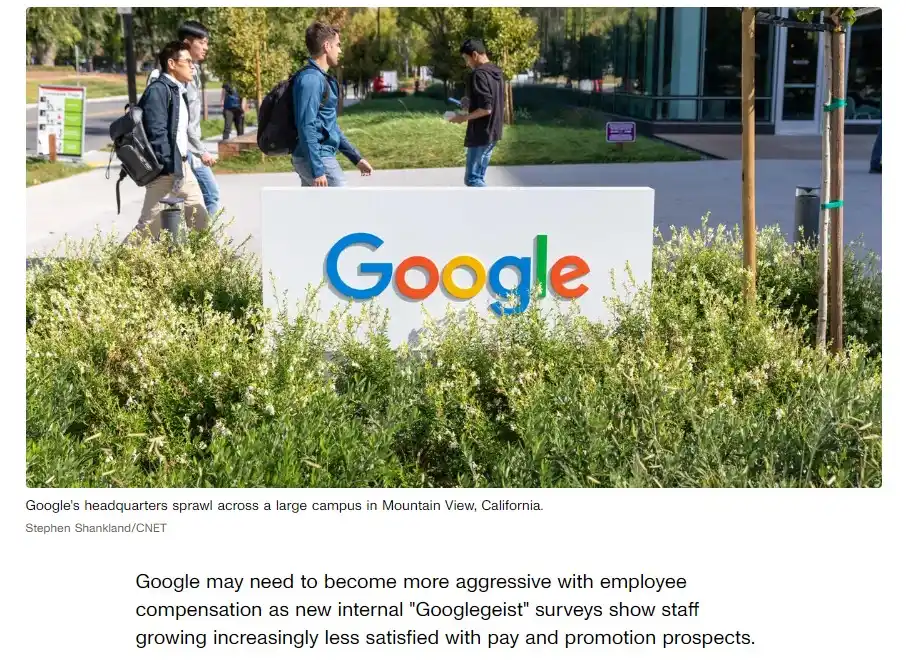
The working class in the US is generally unhappy with their payment & compensation. As the image above shows, even tech giants like Google have unsatisfied employees who think they’re not getting the perks & salaries they deserve. If you’re not happy with your employer and believe they’re violating your employee rights, talk to Rio Law right away. Fill out this form, and we’ll get back to you after reviewing your case and determining its eligibility.
Meet Our California Lemon Law Attorney
Sam Mollaei, Esq.
Sam Mollaei is the Founder and Managing Attorney of Rio Law Group, where he leads a results-driven team dedicated to fighting for the rights of California employees. From wrongful termination and discrimination to wage violations and medical leave abuse, Sam and his team have helped hundreds of workers across California secure justice and compensation for employment law violations. His approach combines legal expertise with strategic business practices, aiming to transform the delivery of legal services in employment and consumer protection law.






 Call
Call