Is 40 Hours a Week Full Time in California? Learn What Legal Experts Say
Some people look at their work schedules and wonder if working 35 or 38 hours a week would be enough to make them full-time employees. Is 40 hours a week full time? That’s the major issue we’re dealing with in this blog. Put yourself in the shoes of a Mannie who clocks around 40 hours every week. But their boss shrewdly skips out on benefits like meal/lunch breaks. They say that overtime doesn’t apply here. So, is Mannie getting the wrong end of the stick here?
You may argue that working 40 hours a week isn’t necessary to make a hard worker a full-time employee worthy of health insurance, OT, vacation time, rest periods, and much more, right? If you’re hustling in retail & warehouses or working your behind off in offices & restaurants, getting your hours wrong can put a dent in your income potential and make you actually lose money.
We at Rio Law have helped many clients in California who were worried about their income and thought that their employers were ripping them off. We can take a look at your case and check if your workers’ compensation lawsuit will fly. Get in touch with us to gauge your legal options.
Is 40 Hours a Week Full Time? What California Laws Say
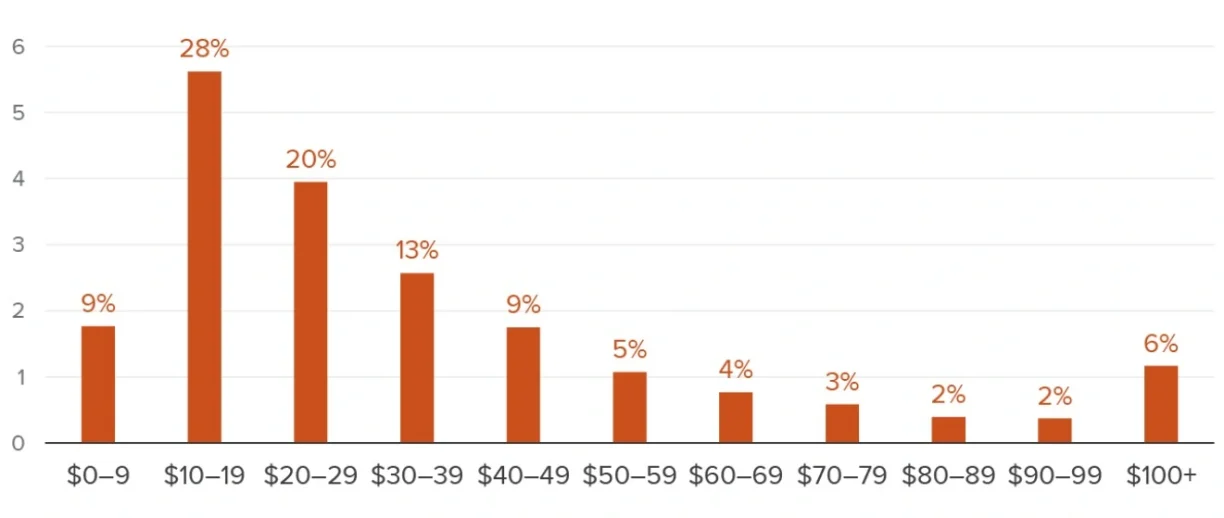
Here’s the million-dollar question: Does working 40 hours a week make you a full-time worker in the Golden State? The state of part-time work is a real tragedy, one worthy of an Odyssey of its own. Part-time jobs can become a trap for Americans who end up working just as hard as their neighborhood full-time wagie… without getting paid the same. Even full-time workers often get the short end of the stick, as 48% of them make $10 to $29 an hour (data from 2023).
Tracing the Origins of the 40-Hour Workweek
The whole idea of a 40-hour workweek has become outdated in Europe. But in America, we’re watching Tesla investors ask Elon Musk to work 40 hours a week to justify his emperor-shaming paycheck. One wonders where the idea of the workweek being 40 hours long came from!
Well, unions fought hard for an eight-hour day in the early 20th century, and argued that people need eight hours to sleep and eight hours to spend on their hobbies or socialization. They also demanded that workers would work five days a week, getting Saturdays and Sundays off for rest & worship. That’s how we got the concept of a 40-hour workweek almost 200 years ago.
How Employers Define 40 Hours in Practice
But what do 40 hours look like in practice? On paper, anyone can claim they worked 40 hours for you. If you put yourself in the slippers of an employer, how do you determine a workweek?
We’ll answer this question from the employee’s perspective (where our sympathies lie, to be candid): you should check your employee handbook or offer letter given to you when you first landed this job. That’s where you’ll find the actual definition (the one that applies to you) of the 40-hour workweek, since there’s no one-size-fits-all approach to ascertaining 40 hours.
A famous example comes from the healthcare sector. You probably heard how nurses don’t have to work exactly 40 hours. A nurse putting in three 12-hour shifts a week works only 36 hours, but she gets paid all the benefits someone working 40+ hours gets, since society realizes how hard and stress-inducing a nurse’s work duties can be!
Retail & warehouse workers should aim higher (at least 40 hours) to cover peak hours. That’s because the DLSE looks at the actual time punched; your title alone doesn’t matter here.
How Full-Time Hours Vary by Industry (& Federal Rules)
So, is 40 hours a week full time in all industries and niches? We’d like to say no here, since different fields & federal regulations tweak what’s traditionally considered “full-time.” The result? You get plenty of gray areas around these 40 hours. You should understand your rights as a worker in California to ascertain how your industry determines a full-time worker.
Brace for Industry-Related Variations in Scheduling
Different industries can play a little with the magic number of “40” to fit their operational needs.
Silicon Valley tech giants — especially those based in San Jose — treat someone working 35 hours as a full-time worker. That’s because they’re running a warehouse with strict production deadlines. They also offer work schedules with telecommuting and other benefits, while a four-day workweek is also getting popular in this line of business.
Restaurants and hospitality sectors push toward the usual 40 hours. But split shifts can make your day feel even longer and more exhausting. Hotels face a morning rush after a relatively full evening dinner service.
Union contracts in public sector jobs spell out exactly how many hours of work they need from you. Generous ones can set “full-time” as 37.5 hours (like they’re doing in Spain) to give you all the usual benefits like pensions and overtime protections.
Gig economies live in a different universe of their own (and pay for it by paying millions of dollars in fines for misclassifying/mistreating gig workers). Gig workers have limited perks because of their part-time status and, therefore, receive no steady benefits.
ACA Federal Thresholds and Look-Back Periods
If things weren’t complicated enough, federal rules add another layer of complexity here through the Affordable Care Act (ACA). It means that if your boss has hired 50+ full-time workers, they’ll have to make health insurance available to anyone averaging 30 hours a week (or 130 hours a month). Falling below this threshold means you’re basically a part-time worker.
But there is also a special method for handling variable-hour employees. We’ll assume that your workweek bounces between 20 and 45 hours a week because of seasonal demands (or when you’re working on projects), your bosses may summon a “look-back” period of 3 to 12 months to average everything out; this way, they can’t rig the system by fluctuating your schedule barely enough to avoid their usual coverage obligations. You get the idea, right?
That’s how the laws in the Golden State make sure you’re getting your work’s worth when you hustle for a company and earn the big dollar bills for them. Is 40 hours a week full time? You now know the answer. Let’s dispel some myths people have about full-time work.
Watch Out for These Gray Areas & Common Myths
“You need to hit exactly 40 hours to qualify as a full-time worker.” Everything stated above gives you a dose of reality about how different niches and sectors may define you as a full-time worker, even if you’re working between 30 and 40 hours a week. You have to check out your employee handbook or company guidelines to figure this one out.
“Part-timers can simply skip overtime rules.” Non-exempt workers do get overtime after 8 hours a day or 40 hours a week. Your full-time or part-time status doesn’t have any relevance here.
“Full-timers automatically get paid vacation or sick days.” Your vacation days will accrue for 1% to 1.5% of hours worked, regardless of your full-time or part-time status. Working full-time means it’ll simply build faster (letting you amass 80 to 120 hours in a single year).
Full-Time (Usually 30 to 40 Hours/Week)
Part-Time (Under 30 Hours a Week)
Health Insurance
ACA needs you to average 30+ hours
You rarely get it (no ACA mandate)
Overtime Pay
1.5x after 8 hours a day or 40 hours a week
Same eligibility (if you’re a non-exempt employee)
Vacation Accrual
Faster buildup (you’ll get like 80 to 120 hours a year)
Slower (proportional to hours worked)
Sick Leave
At least 40 hours a year
Same minimum (you get less accrual)
Job Stability
Better access to promotions & raises
Often on-call, seasonal, and less secure
Typical Examples
Office roles, factory shifts, etc.
Evening retail, weekend hospitality, etc.
Remember Your Rights as a Full-Time California Worker
Overtime Rules
We did a blog on sick leave laws in California a few months ago. Non-exempt workers get many benefits like these in California. Most full-timers qualify as non-exempt. It means working after your assigned hours will land extra money right into your pockets for all your hard work.
You’ll earn overtime at 1.5x your regular rate after 8 hours in a day (or 40 hours in one week). If your schedule stretches past 12 hours daily, it’ll jump to 2x the regular rate. Working a seventh consecutive day means you’re now claiming double the usual pay for the entire shift as well. Alternative workweek schedules let you stretch your days up to 10 hours without overtime.
Mandatory Breaks & Penalties
Every full-timer needs to rest a bit and get their nutritional needs met after toiling for hours. Your rest/meal breaks remain sacred. Doesn’t matter what your status says. Full-time shifts can trigger these rest periods in a reliable manner. You get a 30-minute eating period after the end of your fifth hour. It means you’ll be totally off the clock and can’t be disturbed for it’s just a wee call to the supplier. Another lunch break makes its appearance after the tenth hour.
Your rest period is a duration of ten minutes for every four hours worked. This rest period is also paid by your employer. You can time it in the middle of your shift (when possible). If you happen to miss out on your rest time, your employer will have to pay an hour’s salary as a penalty for each violation. That’s why working 40 hours a week is such an amazing thing…
Vacation Days
Let’s not forget about vacation days. We’ve already stated how you get sick leave as a worker who works full-time for their employer. Vacation time accrues steadily at one hour earned for every 40 to 80 hours you toil. You can easily hit 80 to 120 hours a year this way. But you can’t cap your total under three years’ worth until you cash out.
Why Misclassification Hurts Workers
Is 40 hours a week full time? You now understand the answer to this question in light of all its complexities and technicalities. But here’s the harsh truth: sometimes, it doesn’t matter if you’re a full-time worker hustling for 40 hours a week non-stop. On paper, you do have rights. But your boss may still try to deny these rights by not greenlighting your OT or vacation pay.
Things are a-changing in America. A Washington senator in Olympia has recently proposed a bill to shorten the standard statewide workweek to 32 hours. But many workers in Washington, Oregon, California, and many other places don’t get the benefits they deserve, even after they work 40 hours. Misclassification is the dirtiest weapon in a dishonest employer’s arsenal; your boss may misclassify you to steal your wages. That’s why looking for red flags is a must!
Spotting Red Flags in Your Schedule
If your work schedule hovers at 35 to 40 hours a week without health insurance offers, it is a huge ACA violation. Averaging 30 hours gives you the right to health benefits.
A “salaried full-time” role at 40 hours can’t be filled with routine tasks like data entry or stocking inventory. It makes you non-exempt, and you owe overtime as well. Slapping a fancy title on your jacket alone doesn’t make you an exempt employee.
Working seasonal jobs that promise full-time during the holidays? But then slashed hours under 30? You’ll lose security and benefit accrual just when you need a little stability in your life.
Is your tech company flexing “full-time” benefits at 35 hours, but skipping the mandated sick pay? That’s straight up a refusal to acknowledge state-determined minimums.
Special Cases & Persistent Wage Protections
Union roles can lock you in full-time at 37.5 hours. The good part? You will have ironclad contactors covering your benefits.
Gig apps like Uber will treat most drivers as part-time workers (no matter how hard you are working hauling passengers here and there).
Hybrids are a different breed! You’ll average 32 hours lean full-time for ACA health. But some policies will be part-time for PTO.
Seasonal exemptions can soften your benefits. But don’t forget that core wage laws stay there as gospel truth throughout the year (e.g., overtime & breaks).
Don’t Compromise on Compensation
So, is 40 hours a week full time? If you’re still unsure about work hours and compensation, get in touch with us today. You can submit your documents online. We at Rio Law will go through all these documents and determine the eligibility of your case. We’ve helped countless employees in California get the compensation they deserve (along with backpay) for their hard work. You can be next! Say a loud no to misclassifications and aloha to your rightful paycheck.
Meet Our California Lemon Law Attorney
Sam Mollaei, Esq.
Sam Mollaei is the Founder and Managing Attorney of Rio Law Group, where he leads a results-driven team dedicated to fighting for the rights of California employees. From wrongful termination and discrimination to wage violations and medical leave abuse, Sam and his team have helped hundreds of workers across California secure justice and compensation for employment law violations. His approach combines legal expertise with strategic business practices, aiming to transform the delivery of legal services in employment and consumer protection law.







 Call
Call